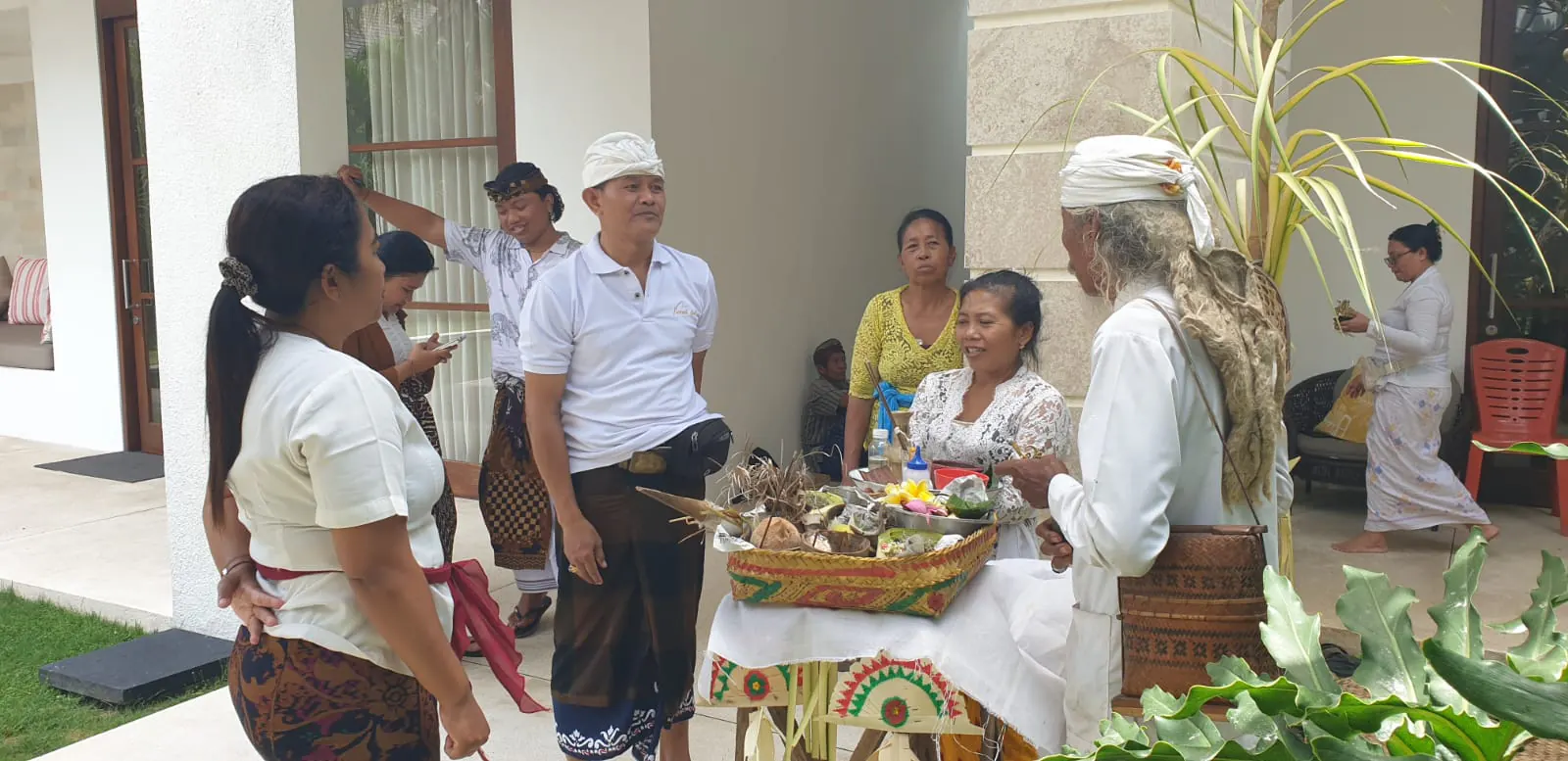
Bali’s luxury villa scene is often celebrated for its private pools, tropical gardens, and personalised service. Yet what truly distinguishes a luxury villa stay in Bali is something far deeper: the island’s living culture.
This article is about Bali villa culture and how Balinese traditions transform luxury villa stays in Bali. For travellers researching luxury villas in Seminyak, private villas in Bali, or authentic Bali experiences for families and groups, understanding Bali’s culture can dramatically enhance the quality of a stay.
Seminyak is one of the best locations for experiencing Bali villa culture because it combines luxury amenities, beach access, world-class dining, and strong connections to traditional Balinese community life.
From daily canang sari offerings and Balinese Hindu rituals to the close-knit community traditions that shape everyday life, Bali villa culture creates authentic experiences that many travellers never encounter in conventional hotels. For affluent families and groups seeking authentic luxury travel in Bali, a luxury private villa in Seminyak offers a unique opportunity to connect with local customs while enjoying exceptional comfort and privacy.
If you are choosing a private villa in Seminyak, try to understand the cultural traditions that surround your villa in order to transform a beautiful holiday into a genuinely meaningful experience. This guide explores how Balinese culture enriches villa life and why cultural immersion has become one of the most sought-after aspects of luxury travel in Bali.
Key Takeaways
| Point | Details |
|---|---|
| Villas deepen culture | Luxury villas provide private spaces for guests to engage directly with Balinese rituals and traditions. |
| Daily rituals matter | Observing canang sari and other customs enhances meaning and connection during a villa stay. |
| Community etiquette | Respectful engagement with local community events and staff adds authenticity and ensures positive experiences. |
| Prioritise authenticity | Select villas with local roots and genuine cultural programming for a truly enriching and sustainable trip. |
Why Choose a Private Villa Instead of a Hotel in Bali?
With the stage set, let’s look at why Bali villa stays are uniquely suited for travellers who seek privacy and authenticity alongside comfort and personalised service.
Embracing Balinese traditions on a family or group stay at a luxury Bali villa can truly transform your experience. Such cultural immersion is one of the main reasons travellers increasingly choose private villas over hotels. Instead of observing local traditions from a distance, villa guests become immersed in the rhythms of daily life. Authentic Bali experiences often emerge naturally through conversations with staff, participation in local customs, and exposure to cultural practices that have been preserved for generations.
A luxury hotel offers comfort, but it also filters out much of the local texture. Villas are different. When you rent an entire villa for your group, you move through the same rhythms as the local community around you. Offerings appear at the gate each morning. Staff members carry out traditions quietly alongside their professional duties. The property itself often reflects centuries of Balinese architectural thinking. This proximity to real culture is something you simply cannot schedule into a hotel stay.
For families and friend groups travelling together, the private setting of a villa creates space for shared, meaningful moments. You can gather for a cooking demonstration led by a chef brought in for the evening, or simply sit together and observe the daily ritual of offerings without the distraction of other hotel guests. These are the kinds of experiences that generate lasting memories.
What Sets a Truly Culturally Immersive Villa Experience Apart from a Standard Luxury Stay
- Connection to daily rituals: Morning offerings, incense, and small ceremonies happen throughout the property as part of everyday Balinese life, not as staged performances.
- Genuine interaction with staff: Villa staff often come from nearby communities and are happy to share the meaning behind traditions when approached respectfully.
- Engagement in local ceremonies: Depending on the Balinese calendar, nearby community ceremonies may be visible or accessible during your stay.
- Food traditions: Authentic Balinese cuisine reflects the island’s Hindu-influenced culture, using specific spices and preparations that carry ceremonial significance.
Planning an itinerary around the ceremonial calendar is worth doing before you arrive rather than after: dates move with the Balinese calendar rather than the Gregorian one, and the rest of the Bali Travel Guide covers the seasons, the neighbourhood and what is worth walking to.
| Traveller motivation | Why villas deliver it better |
|---|---|
| Privacy for group experiences | Exclusive use of the property and its spaces |
| Authentic cultural connection | Staff, architecture, and rituals are part of daily villa life |
| Flexible scheduling | No hotel programs or fixed itineraries |
| Multi-generational comfort | Space and amenities suited to different ages and preferences |
| Meaningful local food experiences | In-villa dining with local staff and traditional recipes |
Canang Sari and Daily Rituals: Experiencing Authentic Bali Culture in Your Villa
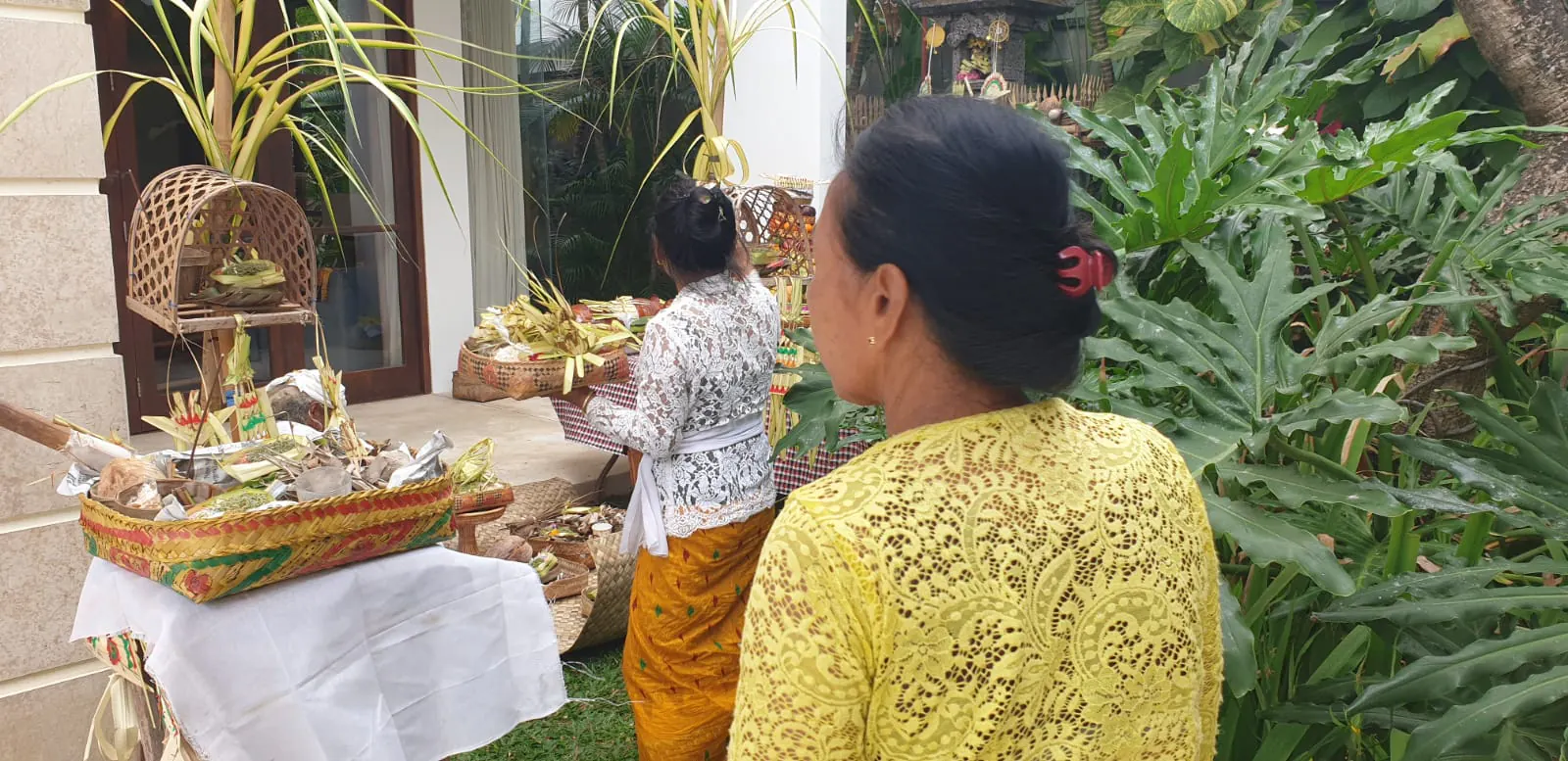
One of the most striking cultural markers you will encounter at a Bali villa is the daily ritual of canang sari. If you have never been to Bali before, these small, beautiful offerings woven from palm leaves and filled with flowers, rice, and incense will likely be the first thing that captures your attention.
What Are Canang Sari?
Your Balinese hosts place canang sari at villa entrances, near statues, by doorways, and throughout the property every single day. By doing this, the Balinese people show acts of gratitude directed towards the gods, symbolising spiritual balance and the ongoing relationship between the human, natural, and divine worlds. For Balinese Hindus, this practice is not ceremonial theatre. It is as essential as a morning cup of coffee.
The daily offering ritual follows a consistent pattern:
- Weaving the basket: Each canang sari is hand-woven from fresh palm leaves, typically by villa staff in the early morning hours.
- Selecting the contents: Flowers of specific colours are chosen intentionally. White represents the east and the god Iswara. Red represents the south. Yellow represents the west. Blue or green represents the north.
- Adding rice and incense: A small amount of rice is placed inside, along with a stick of incense, which carries prayers upward when lit.
- Placing the offering: The canang sari is set in its designated spot with a prayer or a moment of quiet intention, often accompanied by holy water.
- Renewing daily: Offerings are replaced every day. Yesterday’s canang sari are respectfully cleared away to make room for fresh ones.
How Can Guests at a Bali Villa Interact with Local Traditions?
As a villa guest, you will often see this ritual happening quietly around you in the morning. The best way to engage is simply with awareness and respect.
Pro tip: If you are curious about the canang sari ritual, ask your villa staff if they would be comfortable explaining it. Most Balinese staff members are genuinely pleased when guests show sincere interest rather than treating the offerings as photo props. Never step on or over an offering, and avoid touching them without permission.
Spiritual principles influence much of the Balinese villa architecture you will find in Seminyak properties like Casa Brio. Local architects design spaces with intention, often incorporating elements that honour the balance between the three realms of Balinese cosmology: the divine, the human, and the natural world.
Understanding Banjar Communities and Bali Villa Etiquette
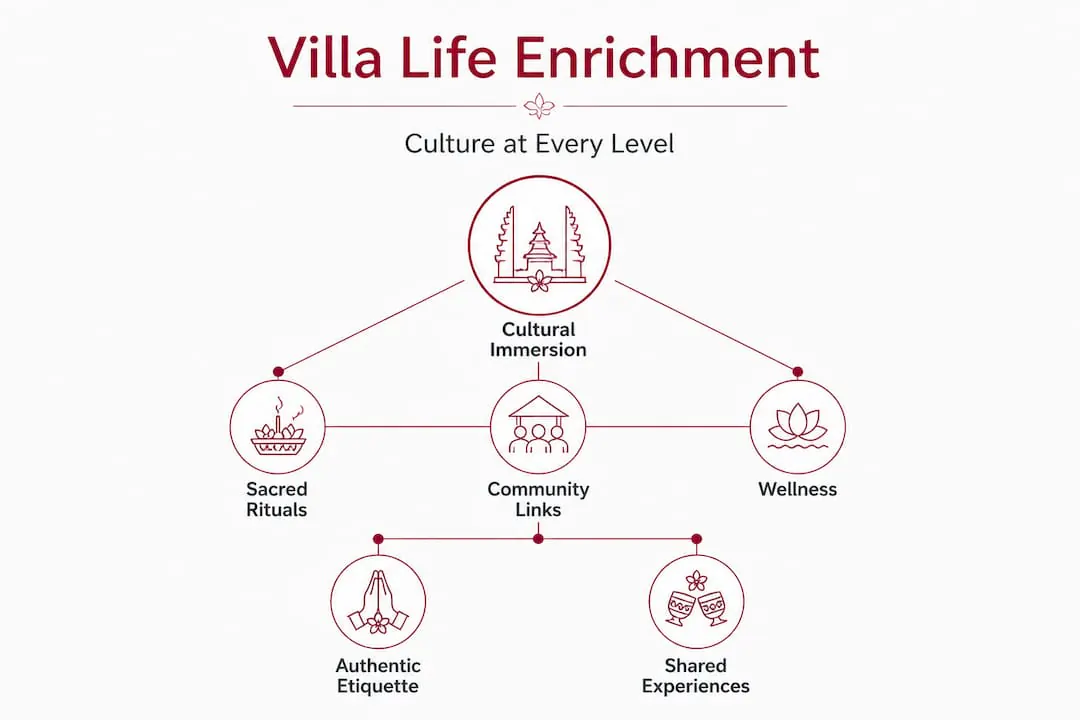
Beyond rituals, Bali’s social structure and etiquette offer another level of cultural engagement in villa life.
The Role of the Banjar in Balinese Community
The banjar is the foundational unit of Balinese community organisation. Think of it as a neighbourhood council with deep cultural and spiritual responsibilities. Every Balinese village is organised into banjars, and these groups oversee everything from communal ceremonies and temple upkeep to local dispute resolution. Villa staff and local businesses in Seminyak are almost always connected to their banjar, and the events organised by these groups shape the rhythm of local life throughout the year.
Cultural Etiquette for Villa Guests
Cultural etiquette for villa guests involves respecting banjar community events, wearing modest dress for ceremonies, maintaining noise awareness, and participating or observing respectfully when local activities are taking place nearby.
Here are the essential dos and don’ts for villa guests in Balinese communities:
- Do greet villa staff warmly each day. A simple acknowledgment goes a long way in building genuine rapport.
- Do dress modestly when walking through the local neighbourhood or visiting any nearby temple.
- Do ask your villa manager about upcoming local ceremonies so you can plan respectfully around them.
- Don’t play loud music during early morning or late evening hours, which are often ceremonially significant times.
- Don’t photograph community ceremonies without asking permission first.
- Don’t enter a temple or ceremony space without appropriate attire, which typically means a sarong and sash.
| Situation | Culturally sensitive guest | Unaware guest |
|---|---|---|
| Meeting the household | Greets staff by name and shows genuine curiosity | Treats staff purely as service providers |
| A ceremony nearby | Adjusts noise levels during ceremony times | Continues loud activity without awareness |
| Leaving the villa | Dresses modestly when leaving the villa | Wears beachwear throughout the neighbourhood |
| Photographing a custom | Asks before photographing local customs | Takes photos without consideration |
| Invited to a local home | Brings a small gift when invited to a local home | Arrives empty-handed or declines invitations |
Pro tip: Your villa’s staff and manager are your best guides to the local community. Before your arrival, ask if there are any banjar events or temple ceremonies scheduled during your stay. Many villa managers can arrange an informal introduction to nearby community events for interested guests. Seasonal ceremonies and what to wear to one are covered further up this page, in the etiquette section. Understanding it before you travel means you spend less time feeling uncertain and more time feeling genuinely connected.
Authentic Wellness and the Future of Luxury Villa Travel in Bali
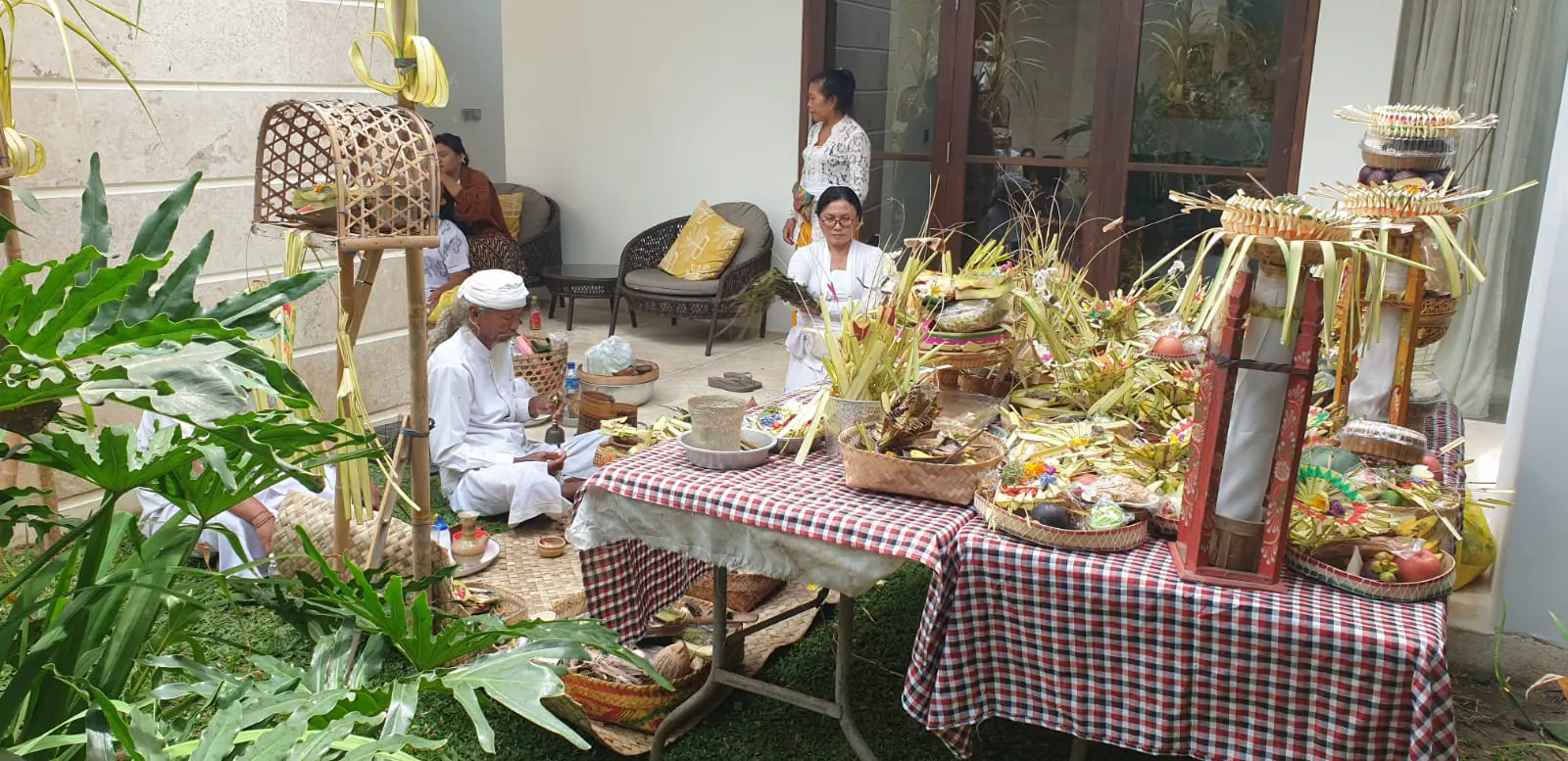
Of course, not all “cultural” experiences are created equal – so how can you ensure your villa choice is truly authentic?
Bali’s wellness industry has grown enormously over the past decade, and with that growth has come a real risk of cultural commodification. Packaged “spiritual retreats” that borrow the surface aesthetics of Balinese tradition without any real local grounding have become common in certain parts of the island. For travellers who genuinely value authenticity, knowing how to spot the difference matters.
“The risk of commodification in wellness tourism is significant; local ownership in spas retains cultural value compared to non-local wellness centres, and authentic Tri Hita Karana integration requires genuine community involvement, not aesthetic borrowing.”
Tri Hita Karana
Tri Hita Karana is the Balinese philosophical concept that guides genuine luxury hospitality on the island. It translates roughly as “three causes of well-being” and refers to harmony between humans and the divine, humans and other humans, and humans and the natural environment. Villas that genuinely operate by this principle embed it into their staffing, design, community relationships, and daily programming.
For luxury travellers, Tri Hita Karana offers a useful framework for identifying authentic villa experiences. The most respected luxury villas in Bali do more than provide premium amenities; they foster meaningful connections between guests, local communities, and the natural environment. This philosophy increasingly defines what sophisticated travellers seek when choosing a luxury villa stay in Bali.
Here is how to assess whether a luxury villa truly supports local culture:
- Look at who owns and operates the villa. Local or locally-partnered ownership is a strong signal of genuine cultural commitment.
- Check the staff composition. Are staff members from the local community? Do they share their traditions or simply perform a hospitality role?
- Evaluate the wellness offerings. Do spa treatments draw on authentic Balinese healing traditions, or do they swap in generic “tropical” aesthetics?
- Ask about community involvement. Does the villa support local artisans, farmers, or banjar events? Are any of the villa’s food or decor sourced locally?
- Read the story behind the design. Genuine design and amenities that reflect Balinese values will have a story worth telling, not just a style guide.
For families and groups travelling together, villas offer privacy for shared rituals, culturally rich workshops, and multi-generational programming that is simply not possible in hotel settings. Affluent travellers increasingly ask for quality and cultural depth rather than a mass-tourism experience, and Bali’s best villas sit exactly at that intersection.
Our Perspective: What Most Luxury Travellers Miss About Bali Villa Culture
Most luxury travellers arrive in Bali prepared to receive comfort. They expect beautiful spaces, attentive service, and curated experiences. What many miss is that Balinese culture does not wait to be scheduled. It simply is the environment around you, every single morning, in the offerings at the gate, in the way your host greets you, and in the sound of a distant gamelan drifting over a temple wall at dusk.
The travellers who leave Bali most changed are not necessarily the ones who booked the most cultural tours. They are the ones who paid attention to the quiet moments. A conversation with a staff member about why a certain flower colour matters. A slow morning spent watching the offering ritual without rushing to the beach. These are not extra activities. They are the heart of what makes a Bali villa stay genuinely different from any other luxury destination in the world.
There is also a practical dimension to this mindset. When you engage respectfully with the culture around your villa, your relationship with the local staff deepens naturally. That produces a level of personalised, warm service that no five-star hotel can replicate, because it is built on genuine human connection rather than professional distance.
The most rewarding Bali experiences are almost always the ones that were never on the original itinerary — which is an argument for leaving room in it, and for asking the people who live on the lane rather than reading another list.
True luxury in 2026 is measured in quality of memory, not thread count. Bali’s cultural richness is the ingredient that converts a beautiful holiday into an experience your group will still be talking about years later.
Discover Authentic Luxury at Casa Brio
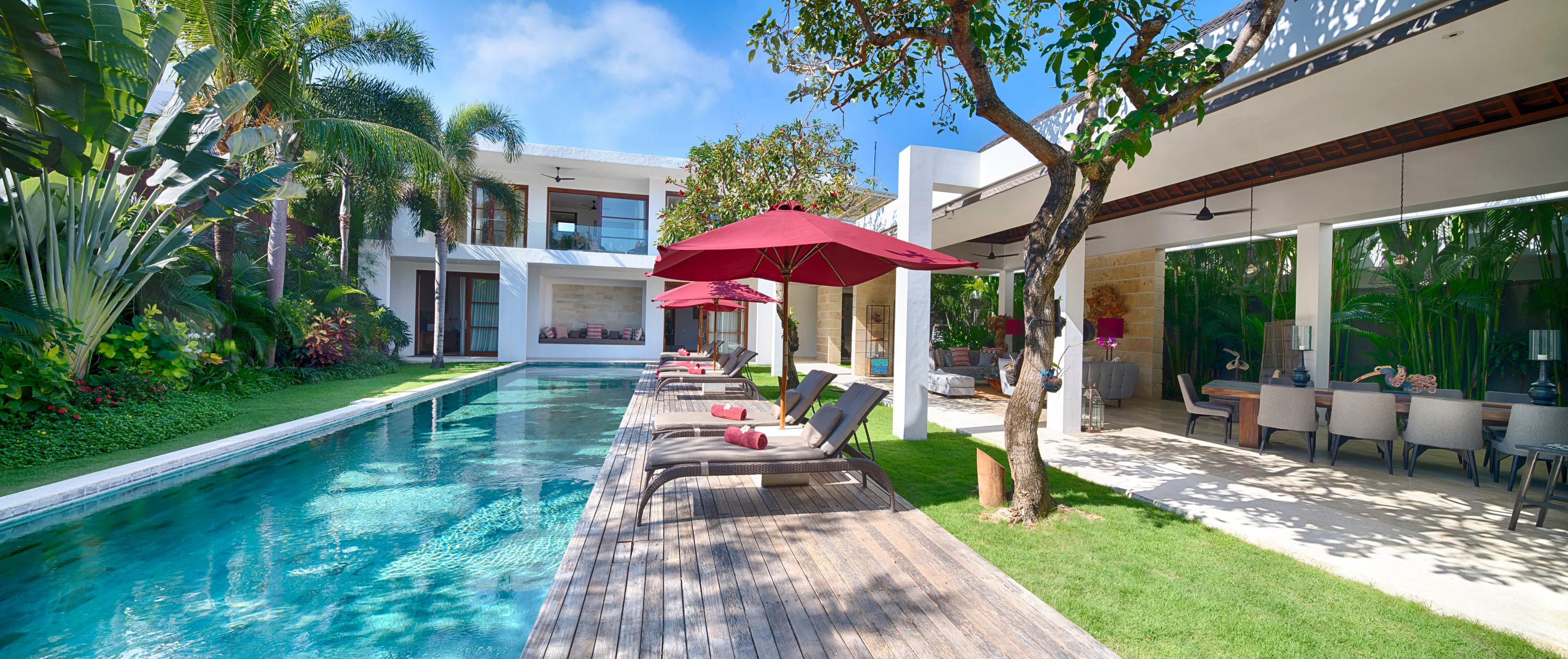
If you are ready to experience this unique blend of comfort and culture, here is how Casa Brio brings Bali’s spirit to your next group journey.
Casa Brio is a fully staffed luxury Seminyak villa, sleeping up to ten guests across four luxury suites and a media room that converts to a twin fifth bedroom. The villa’s contemporary tropical design reflects genuine Balinese sensibility and a unique opportunity to experience Bali villa culture. Its location puts you within walking distance of Seminyak beach, upscale dining, boutique shopping, and world-class spas.
Casa Brio is your perfect base for an authentic Bali experience. Its experienced and gracious staff provide your group with knowledgeable local support from the moment you arrive, helping you navigate everything from daily rituals to nearby ceremonies with confidence and ease. The house itself — the pavilion, the pool deck, the suites and the temple in the garden — is where you can see how it balances the two.
When you are ready to plan your group stay, why not check the published villa rates and find a Seminyak accommodation option that suits your travel dates and group size.
Frequently Asked Questions
What can you see of Balinese culture in a villa that you cannot in a hotel?
The household itself. Canang sari woven fresh each morning and set at the gate, the shrine and the doorways; the family temple in the grounds and what is placed on it; a staff member changing into a sarong to leave for a ceremony at the banjar; the gamelan carrying over the wall on a night when there is one. None of that is arranged for guests and none of it stops when they arrive — it is a house being run the way Balinese houses are run, and you are inside it rather than looking at a performance of it in a lobby.
What are the best authentic Bali experiences for villa guests?
Observing canang sari offerings, attending local ceremonies, enjoying Balinese cooking experiences, learning about Tri Hita Karana, and engaging respectfully with local communities are among the most rewarding authentic Bali experiences.
Why is Seminyak a good location for cultural villa stays?
Seminyak combines luxury amenities with easy access to Balinese culture, allowing guests to enjoy world-class dining and shopping while remaining connected to local traditions and community life.
What are canang sari and how should villa guests respond?
Canang sari are the small palm-leaf offerings of flowers, rice and incense that villa staff weave fresh each morning and place at gates, shrines, statues and doorways. Never step on or over one, and do not move or rearrange them for a photograph. Asking a staff member what the colours mean is welcome; most are pleased by sincere interest.
Can a family or group take part in Balinese rituals together?
Yes, and it tends to be the part of a trip people remember. The staff will show a family how canang sari are assembled and what goes into them, and children take to it faster than their parents do. Ask the villa manager well before the date if you want to attend a temple ceremony: he will say whether one is happening, whether visitors are welcome at it, and what to wear. A cooking session in the villa kitchen is the other easy one. What makes it work in a private house is that the whole group is together and nobody is performing for a room of strangers.
What etiquette should guests follow during Balinese ceremonies?
Guests should dress modestly, keep noise to a minimum, and observe or participate in ceremonies with genuine respect, always following the guidance of villa staff who understand the local context. Cover the shoulders and the knees, wear a sarong and sash inside a temple, do not walk in front of somebody who is praying, and do not photograph a ceremony without asking. Reading that much before you travel means arriving prepared rather than learning by mistake.
How can travellers identify authentic wellness experiences in Bali villas?
Look for villas with local ownership, staff drawn from nearby communities, and wellness programming genuinely rooted in Balinese principles like Tri Hita Karana rather than generically tropical aesthetics. Practitioners and operators in Balinese wellness tourism increasingly agree that local ownership and community involvement are the clearest markers of an authentic experience.
Why does cultural immersion in a private Seminyak villa offer a unique family holiday?
Being immersed in Balinese culture while enjoying the privacy, flexibility and convenience of a well-located luxury Seminyak villa is unique. Surrounding your family with authentic and genuine Balinese traditions adds depth to your stay which can be achieved by no other type of Seminyak accommodation.