

Renting a private villa in Bali is one of the best travel decisions you can make. But knowing how to stay safe in a Bali villa is just as important as choosing the right one. Theft, traffic accidents, pool hazards, and health risks are real concerns that catch unprepared travelers off guard. The good news? Theft and fraud account for around 70–80% of tourist-reported crimes in Bali, while violent crime remains rare. That means most risks are entirely preventable with the right knowledge, a few smart habits, and a quick walkthrough when you arrive.
Table of Contents
- Key Takeaways
- How to stay safe in a Bali villa before you even book
- Daily safety habits that actually make a difference
- Local hazards and health risks around Bali villas
- Common safety mistakes to avoid in Bali rentals
- Verifying and maintaining your safety setup throughout the stay
- My honest take on villa safety in Bali
- Why Casabriobali guests start their stay with confidence
- FAQ
Key Takeaways
| Point | Details |
|---|---|
| Vet security before booking | Ask villa management about entry controls, CCTV, safes, and night-time security procedures before you pay. |
| Test everything on arrival | Walk through locks, safes, pool gates, and lighting the moment you check in to catch problems early. |
| Traffic is the biggest risk | The greatest safety threat to tourists is road accidents, not crime. Use a private driver instead of renting a scooter. |
| Build daily safety habits | Lock doors even when you are inside, store valuables securely, and keep emergency contacts saved on your phone. |
| Document and communicate | Photograph the villa on arrival and establish clear after-hours contact with staff to prevent disputes and delays. |
How to stay safe in a Bali villa before you even book
Most travelers focus on pool photos and bedroom counts when selecting a villa. Smart travelers also ask about security. Getting Bali villa safety tips right starts long before your flight lands.
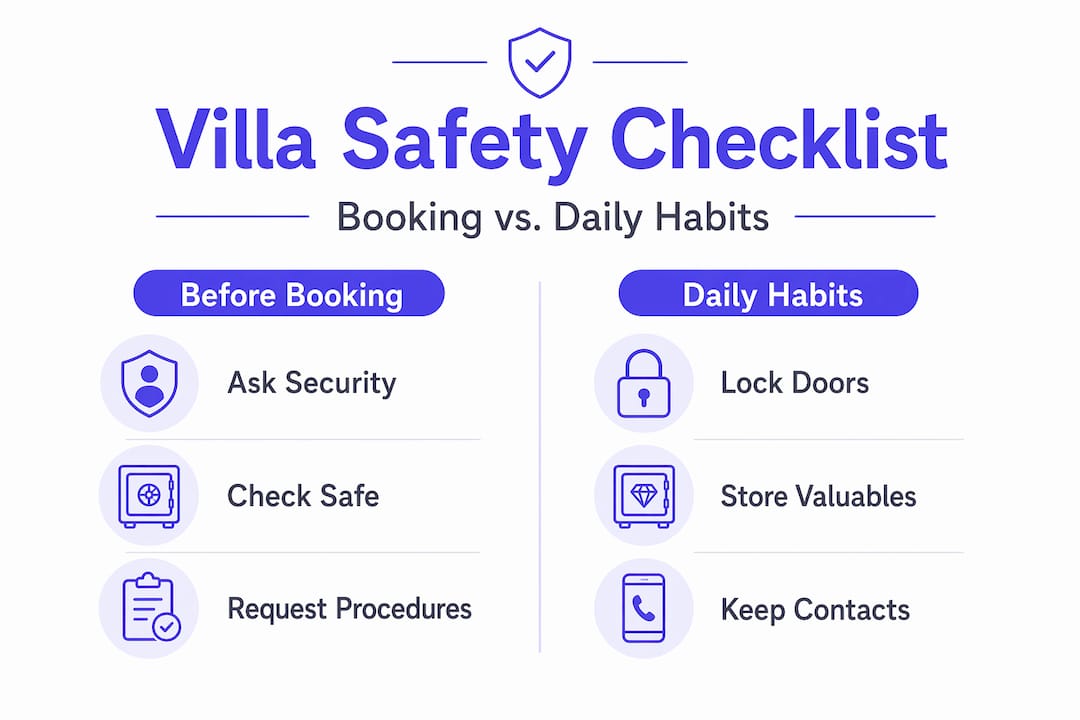
Villa security organized around safe entry, privacy management, and disciplined night-time procedures sets apart a truly safe rental from one that just looks good in pictures. When you are browsing listings, ask these questions directly:
- Does the villa have controlled entry points, such as a locked gate with an intercom or keypad?
- Is there CCTV coverage on the exterior? Are cameras positioned to cover blind spots?
- Is there an in-room safe, and is it physically bolted to the floor or wall?
- What is the protocol for visitors or delivery personnel entering the grounds?
- Who holds spare keys, and how are they managed between guest stays?
The safe question deserves special attention. Many villa safes are not bolted down, which means a thief can simply walk out with the entire unit. Ask the villa manager directly about the safe’s installation before you arrive.
Privacy is another factor most travelers underestimate. Privacy is not just about covers or blinds but includes managing sightlines and defining clear staff movement boundaries. If staff can walk through your bedroom terrace unannounced, that is both a comfort and a security issue. Ask how the property handles staff access and what boundaries are in place.
Pro Tip: Request a written summary of the villa’s night-time security procedures before booking. A professional property manager will have this ready. If they hesitate or cannot answer, treat it as a red flag.
Daily safety habits that actually make a difference
Once you are checked in, Bali villa guest safety comes down to routine. The habits you repeat every single day matter far more than any single precaution.
Here is a practical daily checklist to build into your stay:
- Lock every door and window each time you leave a room, even if you are just heading to the pool. Opportunistic theft happens quickly and quietly.
- Test the safe immediately. Make sure it locks, holds your items securely, and is physically stable. Store passports, cash, and backup cards inside every night.
- Save emergency numbers on your phone. These should include the local police (110), ambulance (119), your villa’s manager direct line, and your travel insurance emergency number.
- Be careful with drinks at social gatherings. Drink spiking does occur in tourist areas. Never leave your drink unattended, and avoid accepting drinks from strangers at bars or parties near the villa.
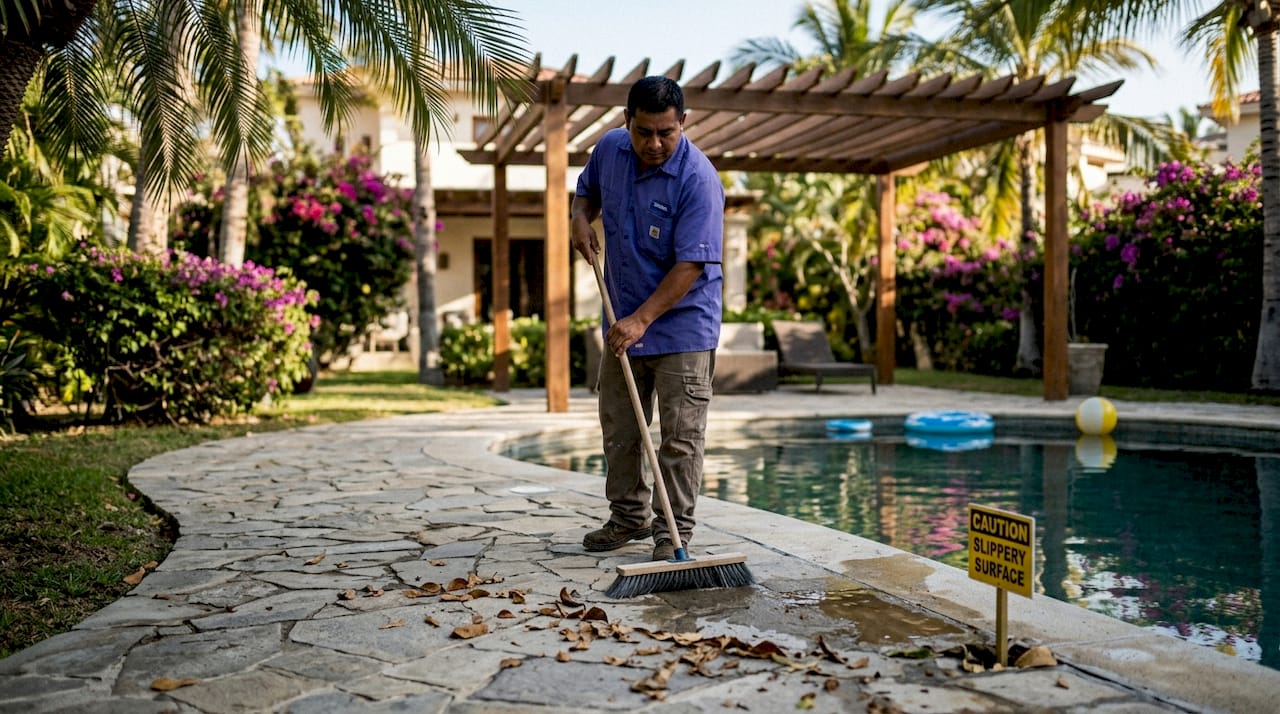
- Check pool gates daily. Internal villa hazards like pool accidents and electrical issues are more common than external crime, so never assume the gate will be in the same condition it was yesterday.
- Control who enters the villa. You do not need to let in every vendor, tour operator, or local contact who calls at the gate. Confirm identities with villa staff before granting access.
- Use only licensed, pre-arranged transportation. Unverified drivers and unlicensed apps create unnecessary risk. Ask villa staff to recommend trusted providers, and check out advice on Bali road safety before you hire anyone.
Pro Tip: Keep a printed copy of your travel insurance policy and emergency contact numbers in the villa’s safe alongside your valuables. Digital access fails at the worst times.
Local hazards and health risks around Bali villas
Crime is not the only thing to think about. Bali has several environment and health risks that travelers routinely underestimate, and understanding them is central to any Bali travel safety guide.
Traffic is the number one danger. The greatest safety risk to tourists in Bali is traffic accidents, not crime. Roads in Seminyak and surrounding areas are congested, poorly lit at night, and filled with scooters traveling in unpredictable patterns. Unless you are highly experienced on two wheels in Southeast Asian traffic conditions, skip the scooter rental and hire a private driver. It costs very little more and removes your single biggest risk exposure.
Water safety is non-negotiable. Tap water in Bali is not safe to drink. Bottled water costs approximately 5,000 IDR per liter and is available everywhere. Use it for drinking, brushing your teeth, and rinsing produce. Stomach illnesses caused by contaminated water can end a vacation fast.
Additional health and environment hazards to prepare for:
- Mosquitoes and dengue fever: Dengue is present in Bali year-round and has no vaccine available in most countries. Use a quality DEET-based repellent consistently, especially at dawn and dusk. Sleep with the air conditioning on or use a mosquito net.
- Stray dogs and monkeys: Both are common around villas and popular areas. Do not approach, feed, or provoke them. If bitten or scratched, seek medical attention immediately as rabies is present in Bali.
- Sun and heat: Dehydration and heat exhaustion happen faster than most travelers expect. Drink water constantly, limit midday sun exposure, and apply SPF 50 sunscreen every morning.
- Earthquake and tsunami awareness: Bali sits on the Ring of Fire. Know your villa’s evacuation route, identify the nearest high ground, and sign up for local emergency alerts.
Bali invests heavily in tourist safety, including visible tourist police patrols in popular areas like Seminyak. Knowing where the nearest tourist police post is located gives you a reliable first point of contact if something goes wrong.
Common safety mistakes to avoid in Bali rentals
Even well-prepared travelers make avoidable mistakes. Knowing the common pitfalls is the fastest way to sidestep them.
- Overconfidence about the neighborhood. Seminyak is one of Bali’s safest areas for tourists, but that comfort can make you sloppy. Unlocked gates, valuables left by the pool, and doors left open at night are regular precursors to petty theft.
- Trusting villa security without verifying it. CCTV cameras can be non-functional. Pool gates can be left unlatched by staff. Alarms can be disabled without your knowledge. Never assume something is working. Check it yourself.
- Using unlicensed money changers. Scam money changers are one of the most reported tourist complaints in Bali. Use bank ATMs or licensed exchange offices with posted rates. If the rate seems extraordinarily good, it is not.
- Ignoring night-time safety routines. Villa hosts should document detailed night-time security procedures covering final perimeter checks and visitor protocols. If your villa has these procedures, make sure staff are actually following them each evening.
- Skipping travel insurance. Travel insurance is essential, covering medical treatment, evacuation, and motorbike use. Medical care in Bali can be expensive, and evacuation to Singapore for serious conditions costs tens of thousands of dollars.
Pro Tip: Photograph or video every entrance, lock, and valuables storage area when you arrive. This record protects you if a dispute arises at checkout.
Verifying and maintaining your safety setup throughout the stay
Checking safety features once on arrival is not enough. A quick daily confirmation keeps your precautions from drifting.
Follow this verification sequence when you arrive:
- Walk through every entry point. Test every lock, deadbolt, and gate latch in the villa to confirm they function before your bags are unpacked.
- Test the safe physically. Shake it, confirm it is bolted, set your own code, and lock a test item inside before storing anything valuable.
- Check pool gate function and pool lighting. Testing villa components on arrival prevents common safety incidents. A pool with no functioning gate light is a nighttime hazard.
- Document the villa condition. Walk through with your phone camera and photograph or video every room. A photographic record of villa condition on check-in helps resolve damage or theft disputes at checkout.
- Confirm after-hours contact. Get the villa manager’s direct number and confirm response times. If your villa has a 24-hour number, save it before your first night.
Here is a quick reference for Bali emergency contacts worth having before you arrive:
| Service | Contact | Notes |
|---|---|---|
| Police emergency | 110 | National emergency line |
| Ambulance | 119 | Available across Bali |
| Tourist police (Bali) | +62 361 224111 | Handles tourist-related incidents |
| BIMC Hospital Kuta | +62 361 761263 | International-standard care near Seminyak |
Keep your travel insurance policy number and the insurer’s 24-hour emergency number saved in your phone and printed inside the villa safe.
My honest take on villa safety in Bali
I have watched guests arrive at well-equipped villas with every security feature in place, and still end up frustrated by the end of their stay because no one actually used any of it. The lock on the front gate is pointless if you leave it open while you wait for a delivery. The safe is irrelevant if you leave cash on the kitchen counter out of habit.
In my experience, communication failures cause most villa security breakdowns, not missing hardware. Guests forget to ask about night-time procedures. Staff forget to communicate who accessed the property during the day. Small gaps compound into real incidents.
What I have found actually works is treating safety as a shared routine with villa staff rather than something you outsource to the property. Talk to your villa manager on the first day. Ask who comes and goes, when, and why. It takes ten minutes and completely changes how you feel about your stay. You stop wondering and start relaxing.
The practical reality is that Bali is genuinely safe for the prepared traveler. The risks are specific and manageable. You are far more likely to get sick from tap water or get clipped on a scooter than experience any serious crime. Prepare for those real risks, build a few daily habits, and then actually enjoy where you are.
— Djani
Why Casabriobali guests start their stay with confidence
Safety is built into how Casabriobali operates as a luxury property in Seminyak. From controlled entry and professionally vetted staff to established night-time security procedures, the villa is designed so you do not have to guess about any of it. Guests receive a full orientation on arrival covering locks, safe installation, pool protocols, and emergency contacts.
If you want to see exactly how the villa is laid out and what security features come with your stay, explore the villa spaces in detail before booking. For guests ready to confirm dates, check availability and rates or visit the Casa Brio main page to learn more. The team is available to answer specific safety questions before you commit.
FAQ
What are the biggest safety risks in a Bali villa?
The most common issues are petty theft and internal villa hazards like pool accidents and electrical problems. Violent crime is rare, but road traffic accidents represent the greatest overall danger to tourists in Bali.
How do I check if a villa safe is actually secure?
Physically test the safe by trying to move or lift it. A safe that is not bolted down offers minimal protection. Many villa safes are not anchored, so confirm with the manager before storing valuables inside.
Is tap water safe to drink in Bali villas?
No. Tap water in Bali is not safe to drink. Use bottled water exclusively for drinking and brushing your teeth. Bottled water is inexpensive and available throughout Seminyak and surrounding areas.
Should I rent a scooter to get around during my villa stay?
Traffic accidents are the top safety risk for tourists in Bali. If you are not an experienced rider in heavy Southeast Asian traffic, use a private driver or a trusted app-based service instead.
How can I protect valuables while staying in a private villa?
Store passports, cash, and backup cards in the villa safe every night. Test the safe on arrival, set your own code, and never leave valuables in open areas of the villa, even for short periods.